For homeowners and landowners in the Rogue Valley, off-grid solar can be a financially sound investment under the right conditions. The decision hinges on several critical factors: your distance from existing utility lines, the cost of fuel for backup generators, your daily electricity needs, and your battery technology choice.
In this rural region, where power outages during wildfire season are increasingly common and utility line extensions can cost $20,000 to $80,000 or more per mile2, off-grid solar systems often pencil out favorably. Typical payback periods range from 8 to 15 years for year-round homesteads, though weekend cabins may see longer payback due to lower usage offsetting fewer grid connection costs.
When Off-Grid Solar Makes Sense:
- Utility line extension exceeds $30,000
- Daily electricity usage is moderate and right-sized (5-15 kWh/day)
- Site has good southern exposure with minimal shading
- Resilience during fire season outages is a priority
- Propane or diesel fuel for generators costs $3.50+ per gallon
When to Think Twice:
- Grid connection is readily available for under $15,000
- High electricity demands (over 20 kWh/day) require oversized systems
- Heavy tree cover or north-facing slopes limit solar access
- Budget constraints prevent quality battery investment
How a Cost-Benefit Analysis Works for Off-Grid Systems
A cost-benefit analysis for off-grid solar compares the total lifetime costs of your solar system against the benefits you receive over that same period. The costs include your initial capital expenditure (panels, batteries, inverters, installation), ongoing operational expenses (maintenance, generator fuel), and scheduled replacements (batteries every 10-15 years, inverters every 12-15 years). The benefits primarily consist of avoided costs: the utility line extension you didn’t pay for, the generator fuel you didn’t buy, and the resilience value of having power during outages.
Financial analysts use several metrics to evaluate these systems. Net present value (NPV) accounts for the time value of money, recognizing that a dollar today is worth more than a dollar in ten years. Internal rate of return (IRR) expresses the system’s profitability as a percentage. Simple payback period tells you how many years until your cumulative savings equal your initial investment. Most analyses use a 20 to 25 year horizon, matching typical panel warranties, and apply a discount rate of 3% to 5% to reflect inflation and alternative investment opportunities.
Sensitivity testing is crucial because small changes in key assumptions can dramatically shift results. Running scenarios with different fuel prices, battery costs, or system sizes helps identify which variables matter most for your specific situation.
Rogue Valley Factors That Shift the Math
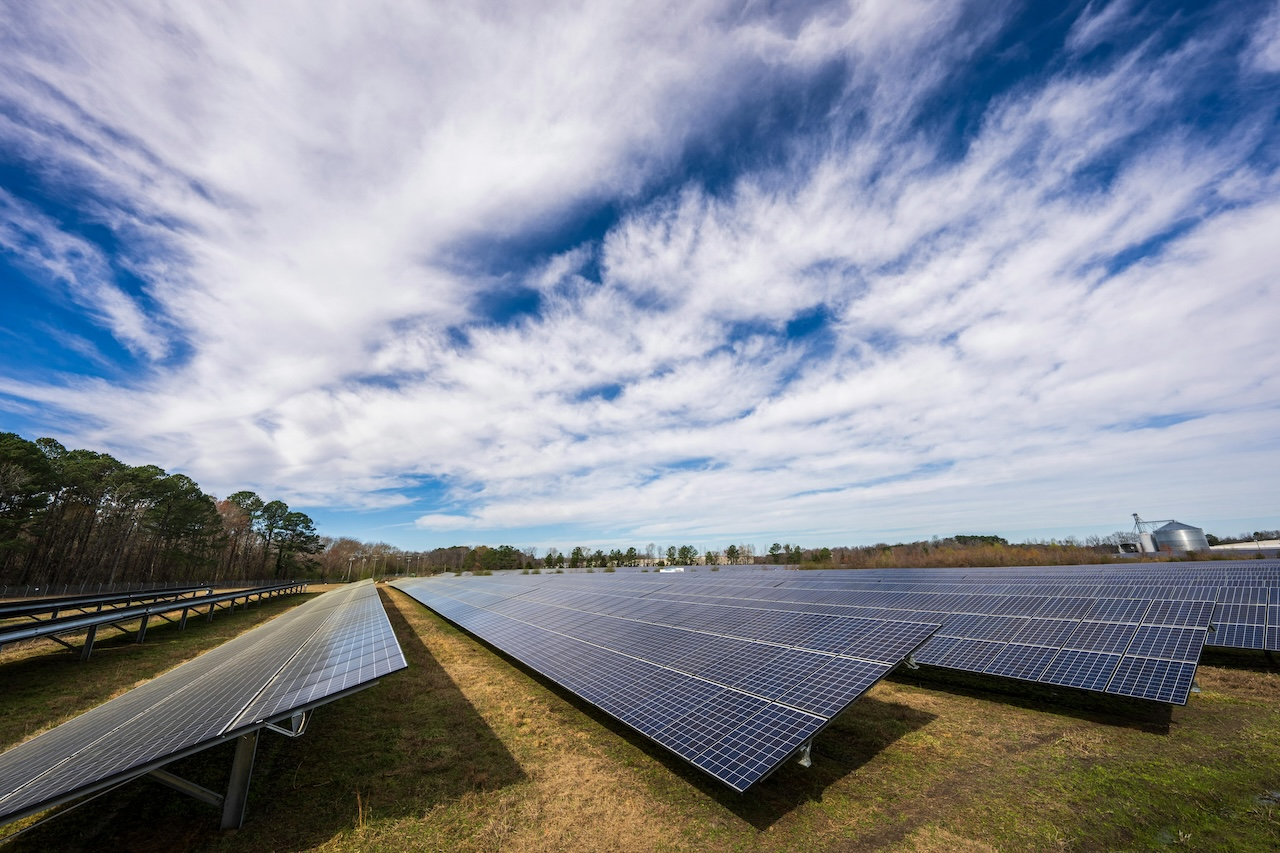
The Rogue Valley’s unique climate and geography create specific considerations for off-grid solar economics. Summer months deliver excellent solar production with long, clear days and intense sunshine. However, winter presents challenges: shorter days, lower sun angles, and occasional snow at higher elevations reduce output precisely when heating loads increase.
Wildfire smoke and haze during late summer can reduce production by 10% to 30% during affected weeks, though this impact varies significantly by year and location.1 Terrain matters considerably in this mountainous region. Properties with southern exposure and minimal tree cover perform far better than north-facing slopes or sites surrounded by tall conifers. Microclimates vary within short distances due to elevation changes and valley effects.
Snow load becomes relevant above 2,000 feet elevation, requiring stronger mounting systems and steeper panel tilts to encourage shedding. Speaking of tilt, optimizing for winter production (angles of 50-60 degrees) captures more energy when you need it most, though it sacrifices some summer output.
Outage risks add non-financial value to off-grid systems. Recent wildfire seasons have demonstrated how vulnerable rural grid connections can be, and many remote properties face extended restoration times when lines go down.
Major Cost Components of Off-Grid Solar
PV Array and Mounting
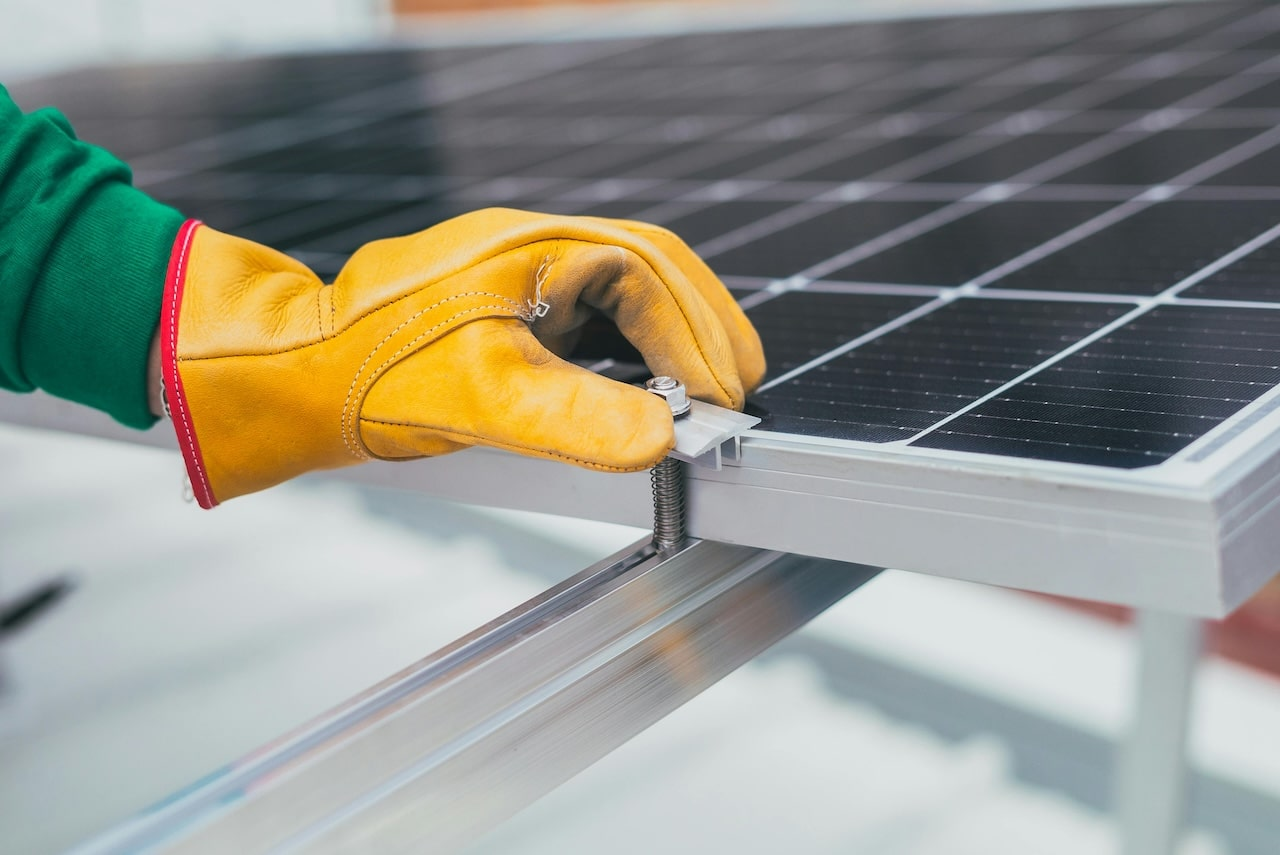
Solar modules currently cost $0.50 to $1.00 per watt for quality panels. A typical 5 kW array runs $2,500 to $5,000 for modules alone. Ground mounting systems cost $3,000 to $8,000 depending on soil conditions and whether you need concrete piers for wind and snow loads. Roof mounting is cheaper but less flexible for optimizing tilt angle and snow shedding.
Battery Storage
Batteries represent the largest variable cost and profoundly impact system economics. Lithium iron phosphate (LFP) batteries cost $400 to $700 per kWh of usable capacity but cycle 4,000 to 6,000 times, potentially lasting 15+ years.5 Lead-acid batteries (AGM or flooded) cost $150 to $300 per kWh but cycle only 500 to 1,500 times, requiring replacement every 5 to 8 years. Over a 20-year period, LFP batteries often prove cheaper despite higher upfront costs.
Inverters, Charge Controllers, and Balance of System
Off-grid-rated inverters with built-in chargers cost $2,000 to $5,000 depending on power rating. MPPT charge controllers add $500 to $1,500. Wiring, combiner boxes, disconnects, and rapid-shutdown equipment contribute another $1,000 to $2,500.6
Backup Generator Integration
A properly sized propane or diesel generators (5-10 kW) cost between $3,000 to $8,000 installed, including auto-start capability, weather enclosure, and fuel storage. Generator runtime directly affects operating costs: at $3.50 per gallon and 0.5 gallons per hour, each hour costs $1.75 in fuel plus maintenance.7
Installation, Site Prep, and Other Costs
For professional solar installation in Medford, OR, labor can run $3,000 to $8,000 for straightforward systems.* Rural sites may incur premiums for travel time and difficult access. Trenching for ground mounts, building access roads, pouring concrete pads, and installing security fencing can add $2,000 to $10,000 depending on site conditions.
Permitting and inspections typically cost $500 to $1,500, though some rural jurisdictions have streamlined processes for off-grid systems.
Maintenance and Replacement Schedules
Annual maintenance (panel cleaning, generator servicing, battery monitoring) runs $200 to $500 if self-performed, or $500 to $1,200 professionally. Budget for battery replacement in years 10-15 for LFP. Inverter replacement typically occurs around year 12-15. Generators require oil changes, spark plugs, and occasional repairs totaling $300 to $600 annually with moderate use.6
Read More: How to Get the Best ROI from Solar Panels
The Hidden Drivers That Make or Break Payback
Several factors exert outsized influence on whether off-grid solar delivers positive returns. The quoted line extension cost matters most: if your utility quotes $50,000 to reach your property, solar becomes compelling at almost any system size. If grid connection costs only $10,000, the bar rises considerably.
Fuel price trajectories affect long-term economics significantly. If propane climbs from $3.50 to $5.00 per gallon over ten years, generator-heavy systems become progressively more expensive.8
Winter irradiance and shading losses determine whether your system meets loads year-round or requires excessive generator runtime. A site with 70% winter shading may need a system twice as large as an unshaded site, destroying economics.
Battery cycle life versus actual daily cycling determines replacement timing. Deep daily cycles (80%+ depth of discharge) shorten lifespan, while shallow cycling extends it.
The DIY versus professional installation choice can swing project costs by $5,000 to $10,000, though DIY builders sacrifice warranties and assume safety risks. Skilled DIYers with electrical experience can achieve good results; others should hire professionals.
Rebates, Incentives, and Financing Considerations
In Grants Pass, you can find low-interest solar loans through local lenders like Evergreen Federal Bank, and through the Energy Trust of Oregon’s Smart-E Lending program.3 Cash purchases yield the best returns, but financing can make projects accessible. Be aware that interest costs reduce overall IRR, sometimes significantly. A 7% loan on a 12-year payback system may extend actual payback to 16 years.9
Read More: How to Finance Solar Panels: 9 Ways to Get Solar Your Home
Conclusion: A Practical Path to Going Off-Grid
Off-grid solar in the Rogue Valley makes strong financial sense when utility line extensions are expensive and electricity loads are right-sized. The combination of lithium iron phosphate batteries, properly sized solar arrays, and appropriately integrated backup generators creates systems with 10 to 15 year payback periods that deliver 20+ years of service.
Summit Solar and Battery can start by obtaining quotes for both line extension and hybrid solar-generator systems. Calculate your realistic daily and seasonal loads. Evaluate your site’s solar access honestly, accounting for trees and terrain. Consider the non-financial benefits of energy independence during wildfire season. With careful planning and realistic assumptions, off-grid solar can deliver both economic value and peace of mind.
Sources
- Pacific Power. (n.d.). Line extension estimator. https://www.pacificpower.net/working-with-us/line-extension-estimator.html
- National Renewable Energy Laboratory. (2023). Impacts of wildfire smoke on solar photovoltaic system performance (NREL/TP-5D00-86640). https://docs.nrel.gov/docs/fy23osti/86640.pdf
- Energy Trust of Oregon. How to Pay for Solar. Published: Nov 11, 2025. https://www.energytrust.org/solar-storage/how-to-pay-for-solar/
- National Renewable Energy Laboratory. (2024). Solar resource maps. https://www.nrel.gov/gis/solar-resource-maps.html
- National Renewable Energy Laboratory. (2024). Residential battery storage. Annual Technology Baseline. https://atb.nrel.gov/electricity/2024/residential_battery_storage
- PV Magazine. (2023, September 13). How long do residential solar inverters last? https://www.pv-magazine.com/2023/09/13/how-long-do-residential-solar-inverters-last-3/
- Generac. (n.d.). 10kW standby generator with 16-circuit switch, WiFi-enabled (7172). https://www.generac.com/residential-products/standby-generators/gaseous/10kw-standby-generator-with-16-circuit-switch-wifi-enabled-7172/
- U.S. Energy Information Administration. (n.d.). U.S. propane residential price (dollars per gallon). https://www.eia.gov/dnav/pet/hist/LeafHandler.ashx?f=M&n=PET&s=M_EPLLPA_PRS_NUS_DPG
- Energy Trust of Oregon. (n.d.). Larger incentives reduce costs for adding solar storage. https://blog.energytrust.org/larger-incentives-reduce-costs-for-adding-solar-storage/