Oregon weather is no joke. The coast sees sustained winds that would flatten a poorly engineered rooftop system. The Cascades bury equipment under feet of snow. And summer hailstorms roll through the Willamette Valley and Southern Oregon without warning. So it’s a fair question: can modern solar panels actually handle all of that?
The short answer is yes — when systems are correctly engineered to local code. Oregon’s adopted building code (OSSC) requires photovoltaic systems to be designed for site-specific wind and snow loads. Module manufacturers submit products to standardized hail testing. And insurance — not the solar warranty — is the right backstop for weather-related impact damage.
The rest of this guide translates the relevant codes, test standards, and installation practices into plain language for Oregon homeowners and facility managers evaluating solar.
Oregon’s Wind & Snow Load Requirements
Wind Loads
Oregon adopted statewide design wind speed amendments effective October 1, 2023. These amendments updated the process for “Special Wind Regions” (SWR) and direct engineers to verify site-specific conditions using the ASCE 7 Hazard Tool.
For Josephine and Jackson County, the 2022 OSSC Table 1609.3 lists basic design wind speeds as:
- Risk Category I: 90 mph
- Risk Category II (most residential): 96 mph
- Risk Category III: 103 mph
- Risk Category IV: 107 mph
Exposure category matters too. Most Southern Oregon areas are classified Exposure B (suburban terrain); some locations may require Exposure C (open terrain). The engineer of record must justify the exposure used on stamped drawings.
Statewide, the minimum basic design wind speed listed on PV plans is 98 mph where applicable — but always confirm your county’s specific value from Table 1609.3 and run the project address through the ASCE 7 Hazard Tool to check for Special Wind Region overlays. SWR conditions are site-specific and can appear even within a single county, particularly in coastal, mountainous, or complex terrain areas.
Snow Loads
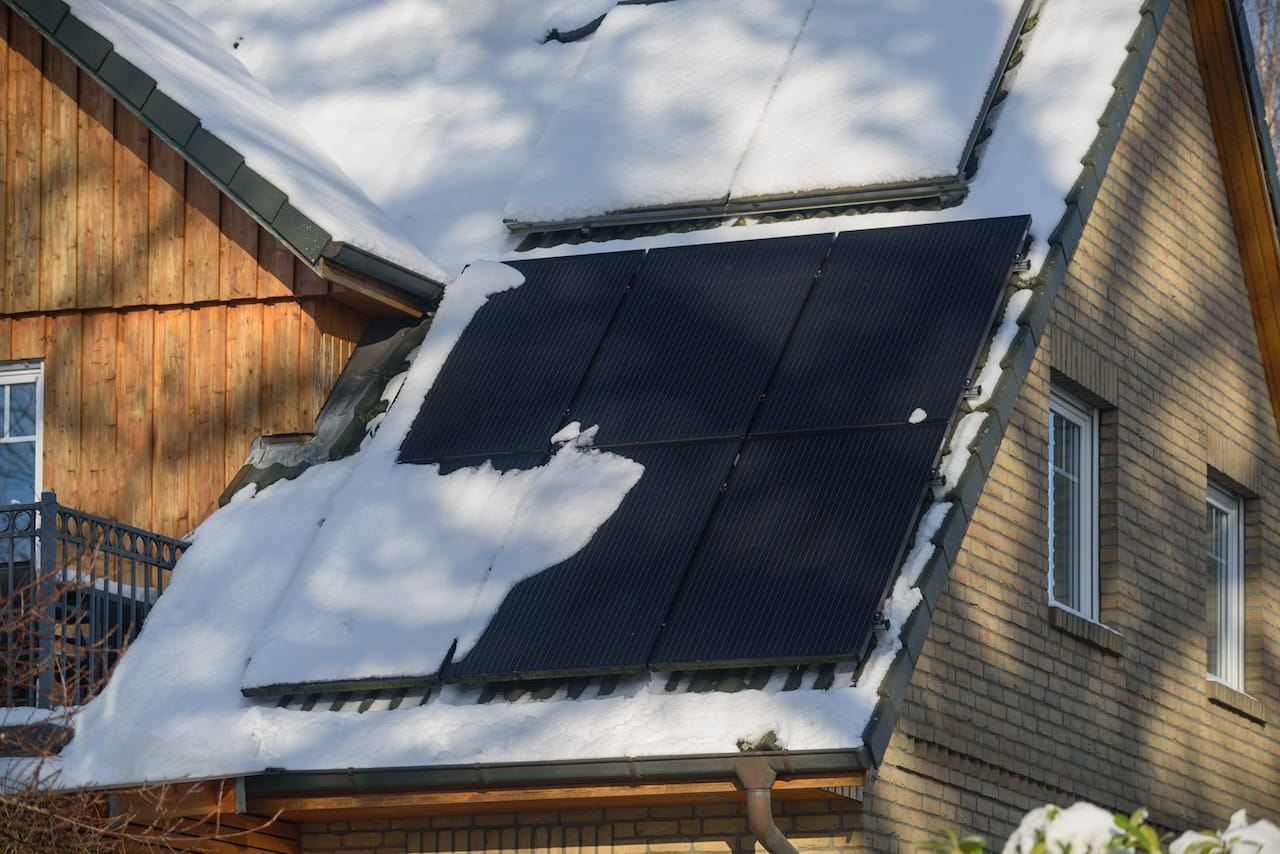
Oregon’s minimum design roof snow load for PV systems is 20 psf, and this value must be listed on the plans. A rain-on-snow surcharge of +5 psf applies where relevant (both commercial and residential projects).
Ground snow load drives the engineered design for roof structure. Prescriptive state forms accommodate projects up to 36–70 psf ground snow load — beyond those thresholds, an engineered design is required. Site-specific ground snow loads are available from the SEAO Snow Load Lookup tool. For areas like Bend or Mount Hood foothills, high ground snow loads frequently push projects into engineered territory.
Typical Design Criteria on Oregon PV Plans
| Design Item | Minimum / Notes | Code Source |
| Basic design wind speed | Jackson County RC II: 96 mph; statewide ? 98 mph where applicable; verify Special Wind Region (SWR) per ASCE 7 Hazard Tool | OSSC Table 1609.3; Oct 2023 amendments |
| Exposure category | B (suburban) or C (open); engineer of record must justify on drawings | OSSC 1609 / Medford commercial criteria |
| Sloped-roof snow load | Not less than 20 psf; must be listed on PV plans | OSSC / City of Medford guidance |
| Rain-on-snow surcharge | +5 psf where applicable (commercial & residential) | OSSC |
| Ground snow load | Site-specific; use SEAO Snow Load Lookup; engineered design required if > 36–70 psf prescriptive threshold | SEAO / OSSC |
| Module dead load | Per manufacturer datasheet; shown on structural drawings | Stamped PV plans |
Sources: OSSC Table 1609.3; Oregon Oct 2023 wind amendments; City of Medford Commercial Design Criteria 2024; SEAO Snow Load Lookup.
Hail: What the Standards & Real-World Events Say
Hail Testing 101 (IEC 61215 / UL 61730)
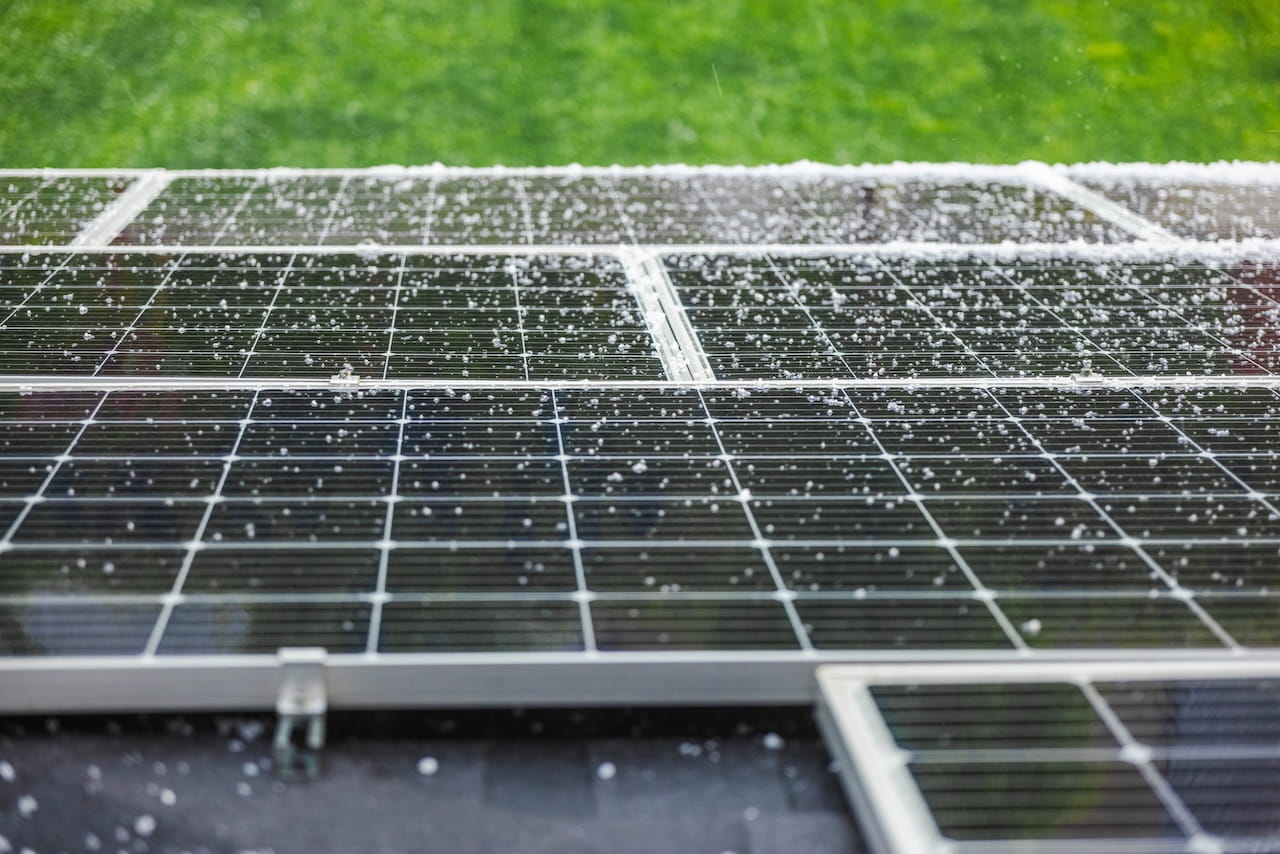
Every module sold in the U.S. market must pass IEC 61215 and UL 61730 certification. The baseline hail test uses 25 mm ice balls fired at approximately 23 m/s (~52 mph) across multiple impact points. Modules must show no cracking, delamination, or significant output loss to pass.
Larger-diameter tests — 35 mm, 46 mm, or even 76 mm — exist as optional performance certifications. Some manufacturers pursue these as a marketing differentiator, especially for commercial and utility-scale markets where hail exposure is a known risk. When evaluating modules for high-hail-exposure Oregon locations, ask for the datasheet’s mechanical load ratings and confirm which hail test diameter the product has passed.
| Ask your installer: “What hail size is this module certified to, and where can I find that on the datasheet?” Standard is 25 mm; some premium modules exceed this. |
What Warranties and Insurance Actually Cover
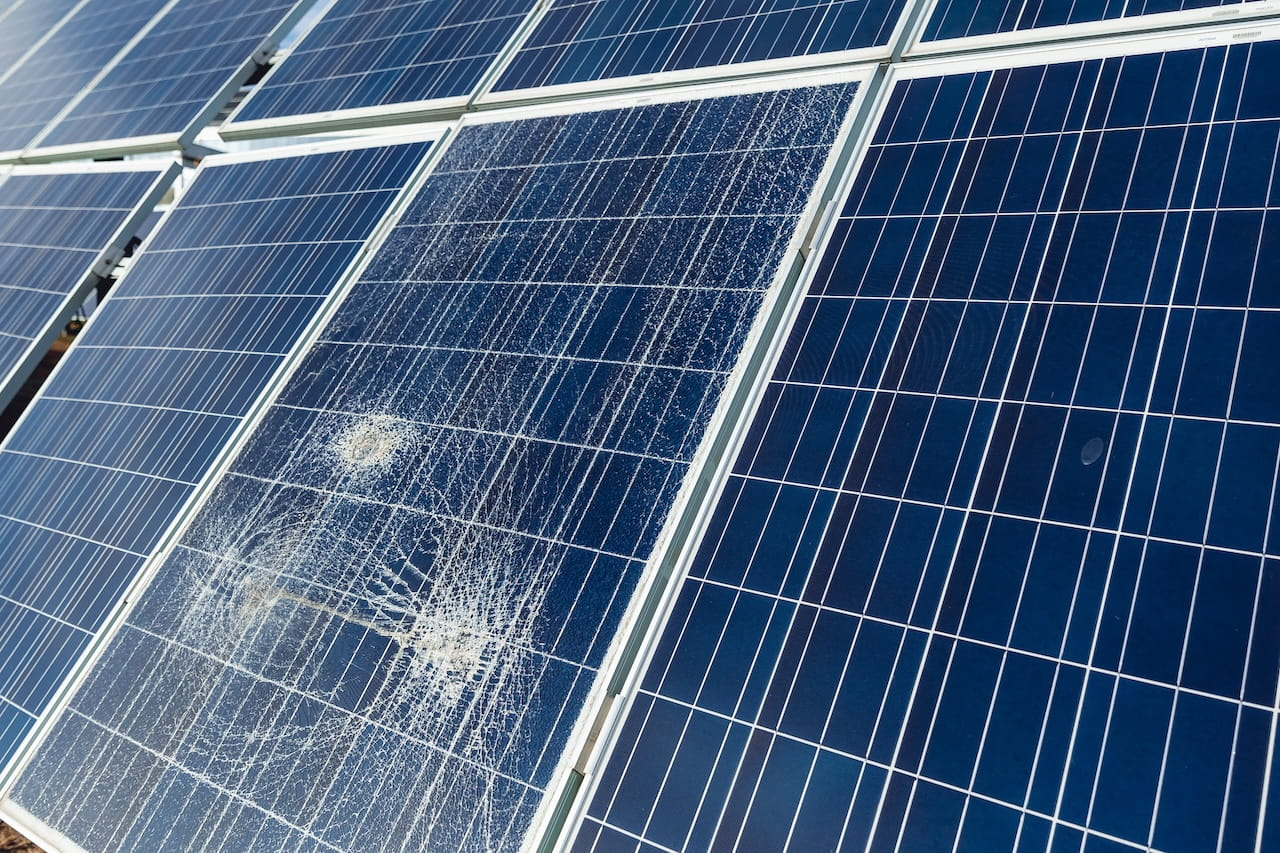
Product warranties from module manufacturers almost universally exclude physical impact damage from weather events including hail. Performance warranties cover power output degradation over time — they do not cover cracked glass from a hailstorm.
Hail damage to solar panels is typically covered under your homeowners’ or commercial property insurance policy, the same way hail damage to a roof or skylight would be handled. Confirm your coverage terms with your carrier before installation, and document the system with photos at commissioning to support any future claims.
Read more: Understanding Solar Equipment Warranties: How NOT To Void Them
Technology That Improves Weather Resilience
Module Advances
Modern modules are substantially more durable than first-generation panels. Thicker tempered front glass (typically 3.2 mm, with some manufacturers offering 4 mm+), reinforced aluminum frames, and improved encapsulant materials all contribute to better real-world weather performance. N-type cell technologies — including TOPCon and HJT — maintain stronger output in cold temperatures and low-light winter conditions, improving seasonal production in Oregon’s climate.
Bifacial modules can offer albedo gains on commercial ground-mount systems, capturing reflected light from snow cover — a useful characteristic in high-snowfall regions.
Module Mechanical Load Ratings
| Module Type | Front Load (Pa / psf) | Back Load (Pa / psf) | Standard Hail Test |
| Standard 60/66-cell mono PERC | 5,400 Pa / ~113 psf | 2,400 Pa / ~50 psf | IEC 61215 (25 mm) |
| High-load framed bifacial | 5,400–7,000 Pa / up to ~146 psf | 4,000 Pa / ~84 psf | IEC 61215 (25 mm) |
| Frameless glass-glass | 5,400 Pa / ~113 psf | 5,400 Pa / ~113 psf | IEC 61215 (25 mm) |
| Premium N-type / TOPCon | Varies; often 5,400+ Pa front | 2,400–4,000 Pa back | IEC 61215 + optional 35 mm+ |
Racking & Attachment
Racking is where code requirements become physical hardware. High-load rail profiles, engineered anchor spacing, and module clamp torque specs are sized to meet the psf values calculated from your site’s wind speed, exposure category, and snow load. For sloped roofs, wind uplift pressure is highest at perimeter and corner zones — attachment spacing tightens in these areas per ASCE 7 component and cladding calculations.
Perimeter edge setbacks reduce uplift on modules at the roof edge. Staggered attachment patterns and rail splices rated for specific moment loads ensure the system acts as an engineered assembly, not just a collection of parts.
Power Electronics & Monitoring
Module-level power electronics (MLPEs) — microinverters or DC optimizers — allow string-level and module-level monitoring. After a storm event, production anomalies surface quickly in your monitoring portal, helping you identify any modules that may warrant inspection. Rapid shutdown systems, required under Oregon’s adopted NEC code, also improve serviceability after weather events.

Installation & Maintenance Practices for Oregon Conditions
Snow Shedding & Winter Operations
Mount tilt angle, row spacing, and lower-edge setbacks from gutters affect how snow sheds and whether drift accumulation occurs between rows or against roof obstructions. These are design considerations, not afterthoughts. Your installer should address them in the plan set.
For snow removal: the standard guidance is to do nothing. Snow melts and sheds passively. Attempting to chip ice off glass surfaces risks breaking the tempered glass or scratching the AR coating — damage that voids the product warranty. Seasonal production loss from snow cover is minor relative to the annual output of a well-designed system.
After a Wind or Hail Event
- Conduct a ground-level visual inspection for visible panel cracking, displaced modules, or racking issues.
- Check your monitoring portal for underperforming strings or modules.
- Contact your installer before accessing the roof — do not attempt DIY inspection of a potentially damaged system.
- For hail damage, photograph the system and adjacent roof surfaces and contact your insurance carrier. Your installer can provide documentation to support the claim.
Costs & ROI: Does Weather-Hardening Add Much?
Code-compliant engineering is a standard line item in every Oregon solar PV installation — not an upgrade. Stamped structural drawings, correct attachment counts, and appropriately rated racking are part of what you’re paying for in any permitted system. The permit and inspection process exists to verify these requirements are met.
In some cases — high-snow-load sites, coastal wind exposures, or commercial rooftops with complex geometry — the engineered design will specify more attachment points or heavier rail profiles than a standard residential job. The incremental cost of that added hardware is modest relative to the 25-year life of the system and the protection it provides for both the solar investment and the underlying roof structure.
The right question isn’t “should I pay for a weather-hardened system?” — it’s “is my installer actually engineering to my site’s conditions?” Ask to see the design wind speed, exposure category, and snow load on the stamped drawings.
FAQ: Common Oregon Solar Questions
Will the coast’s winds rip my panels off?
Not if the system is engineered correctly. Coastal and gorge sites may fall in Special Wind Regions requiring site-specific analysis via the ASCE 7 Hazard Tool. Attachment count and edge setbacks address wind uplift. Ask your installer for the design wind speed and exposure category on the permit drawings.
What’s the minimum snow load my roof PV must meet?
Sloped-roof snow load must be not less than 20 psf, plus a rain-on-snow surcharge where applicable. Site-specific ground snow load (available from the SEAO Snow Load Lookup) drives the structural design, and engineered drawings are required when loads exceed prescriptive thresholds.
Do manufacturers guarantee against hail?
No. Module certifications (IEC 61215 / UL 61730) demonstrate resistance to a standardized hail test — they are not warranties against damage in real hailstorms. Impact damage is excluded from product warranties. Homeowners’ or commercial property insurance is the correct coverage vehicle for hail damage claims.
Should I brush snow off my panels?
Generally no. Passive melt and shedding is the recommended approach. Attempting removal risks glass breakage or coating damage. Production loss from seasonal snow cover is minor over the course of a full year.
Do I need stronger panels in Bend or the Mount Hood area?
High ground snow loads in those areas may push your project outside prescriptive design limits, requiring engineered drawings. Your structural engineer will size attachments, rail profiles, and module selection to meet actual site loads. Use the SEAO Snow Load Lookup to check your specific address.
What should be on my permit drawings?
At minimum: design sloped-roof snow load (?20 psf), basic design wind speed (correct county value from OSSC Table 1609.3), exposure category, rain-on-snow surcharge where applicable, module dead load, and attachment spacing for field, perimeter, and corner zones.
Get Ready to Install a Solar System Built for Oregon
Summit Solar and Battery designs and installs code-compliant PV systems across Southern Oregon — engineered to local wind loads, snow conditions, and site-specific exposure categories. We pull stamped drawings, handle permitting, and stand behind our work long after commissioning day.
If you’re evaluating solar for your home or facility and want a design that actually reflects your site’s conditions — not a one-size-fits-all quote — we’d like to talk. Contact Summit Solar and Battery for a free site evaluation and system design consultation.