Blackouts Are Rising, But Solar Keeps the Lights On
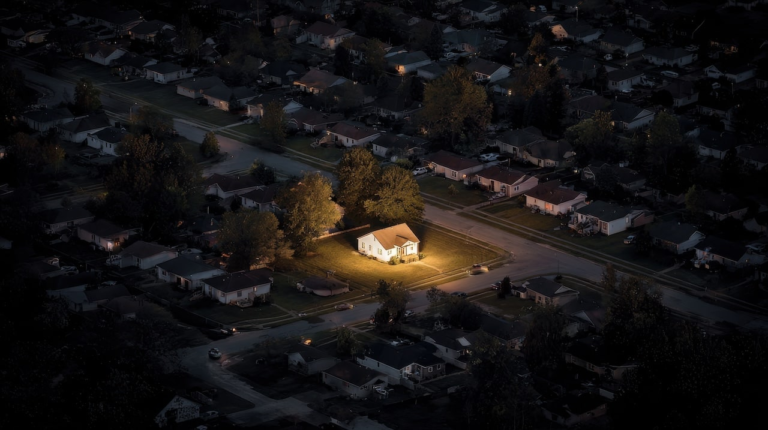
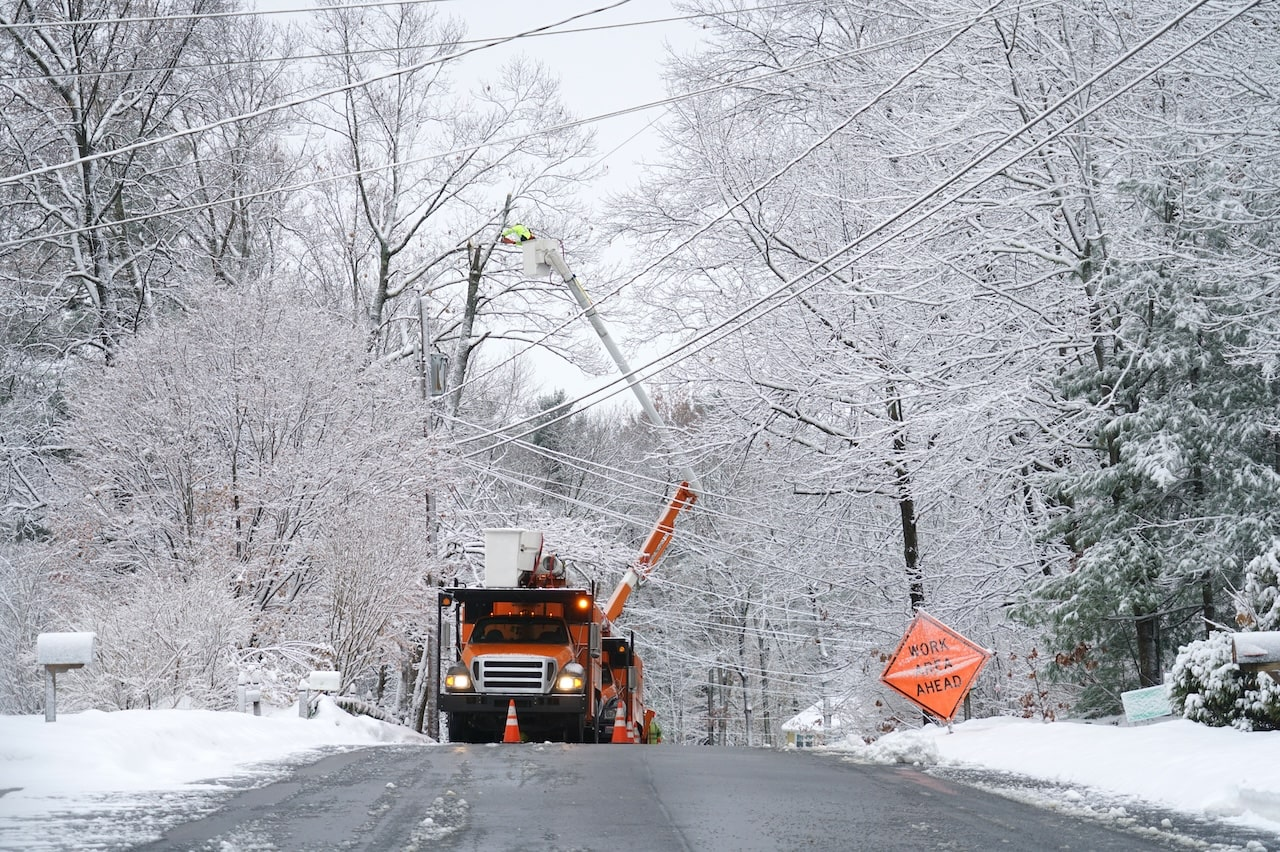
Severe weather events are pushing America’s grid to its breaking point. Ice storms, wildfire shutoffs, hurricanes, and derechos are causing longer and more frequent blackouts. Most homeowners discover a frustrating reality when the lights go out: their solar system shuts down right along with the grid. With the right equipment—a hybrid inverter and battery storage—your solar panels can keep essential appliances running through multi-day outages. This guide explains how solar panels work during power outages, which components you need, how to size your system, and what to do when the grid goes down.
Do Solar Panels Work During a Power Outage?
Standard grid-tied solar installations CANNOT power your home during an outage, even on sunny days. This isn’t a flaw—it’s a safety feature called anti-islanding protection. Federal regulations UL 1741 and IEEE 1547 mandate anti-islanding protection to safeguard utility workers.
When utility workers repair damaged lines, rooftop solar arrays could electrocute them if the systems kept feeding power into downed lines. Grid-tied inverters detect grid loss within milliseconds and immediately shut down.
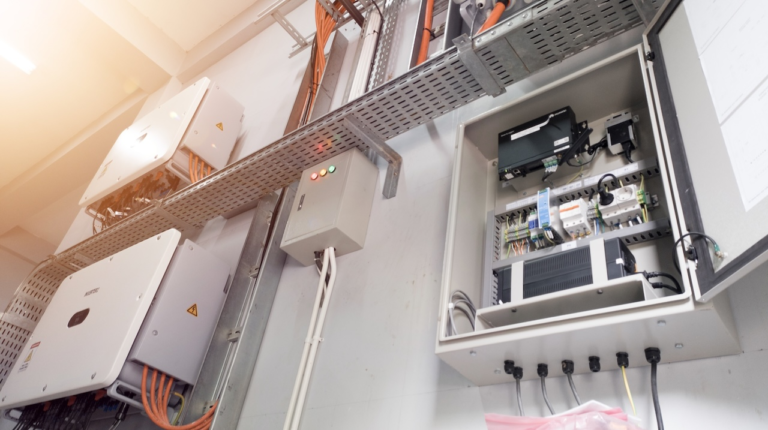
The solution requires three components: a hybrid inverter capable of islanding mode, battery storage, and a critical loads panel that isolates essential circuits. When the grid fails, an automatic transfer switch disconnects your home from utility power and creates a self-contained microgrid. Solar panels charge the battery during daylight, batteries power critical loads overnight, and the cycle repeats until utility service returns.
Can solar panels power a house during a power outage?
Yes, with a hybrid inverter, adequate battery storage, and a critical loads panel. Whole-home backup requires 40-60+ kWh. Most choose essential-loads backup with 10-30 kWh supporting critical circuits.
Before storms, test backup mode and set battery reserves to 70-80%. During outages, your system switches automatically—shed non-essential loads and run heavy activities during midday solar production. After power returns, systems automatically reconnect.
Does solar power work during power outage without battery?
No, solar typically doesn’t work during outages without batteries. Limited exceptions exist for specialty inverters with “secure power supply” outlets providing 15-20 amps during daytime only.
Can Solar Panels Power a House During a Power Outage? (It Depends on Your Loads)
Whether solar panels can power your home depends on how much power you use simultaneously (kilowatts) and how much energy storage you have (kilowatt-hours). A 5 kW battery handles your refrigerator and lights but trips into overload if you add the microwave and coffee maker. A 10 kWh battery powering 500 watts of baseline loads runs for 20 hours, but add a 1,500-watt space heater and runtime drops to under 7 hours.
Whole-home backup requires 40-60 kWh to run central HVAC and all appliances without restrictions. Essential-loads backup with 10-30 kWh is more practical and cost-effective, powering only critical circuits while you shift laundry and dishwashing to solar production hours. High-draw appliances present challenges: a 3-ton mini-split draws 3,000-4,000 watts, a well pump needs 2,000-2,500 watts with 3x surge on startup, and a gas furnace blower needs 600-900 watts.
Expected Solar Output During Storms & Cloudy Days
Heavy cloud cover reduces output to 10-25% of rated capacity—a 10 kW array might only generate 1-2.5 kW at midday. Light overcast allows 50-70% production. Battery storage remains critical for overnight and dark storm hours. High-efficiency modules with good low-light performance help maximize output during marginal conditions.
How to Use Solar Panels During a Power Outage: Step-by-Step
Before the Storm (Prep Checklist)
When forecasts predict severe weather, update inverter firmware, test backup mode, and set battery reserve to 50-80% rather than the typical 20-30% minimum. Allow your battery to fully charge the night before. Clear roof gutters and stage essential supplies.
During the Outage
Your automatic transfer switch handles the transition—lights may flicker momentarily, but backup loads restore within seconds. Shed non-essential loads: outdoor lighting, pool pumps, EV charging, second refrigerators. Run energy-intensive activities during midday solar production—dishwashers at noon, laundry when the sun is highest, and charge devices between 10 AM and 3 PM.
After Power Returns
Your inverter detects stable utility voltage, waits 5 minutes, then seamlessly reconnects. Review outage event data through your app to understand battery depth-of-discharge and which loads consumed the most energy. Reset your battery reserve to normal levels.
Best Solar Battery Designed for Power Outages
Lithium iron phosphate (LiFePO?) batteries are preferred for home backup due to their safety profile, 6,000+ cycle lifespan, and wide temperature tolerance (-4°F to 140°F). Nickel manganese cobalt (NMC) lithium batteries offer higher energy density but typically endure only 4,000-5,000 cycles and require more thermal management.
Properly sizing requires understanding energy capacity versus power rating. A 13.5 kWh battery delivers 1 kW for 13.5 hours theoretically, but real usable capacity is 90-95%. The power rating determines what runs simultaneously—if essential loads include a well pump requiring 3,000 watts startup surge plus a mini-split drawing 2,500 watts, you need at least 5.5 kW peak power, often requiring multiple battery units.
Premium batteries warrant 70% capacity retention after 10 years or specific throughput (often 37.8 MWh for 13.5 kWh batteries). Look for UL 9540 certification, UL 1973 for cells, and built-in rapid shutdown. Scalability matters: modular batteries accepting add-on capacity, load control relays, integration with smart panels, and generator input ports increase flexibility.
Real-World Runtime Examples
A 10 kWh / 5 kW battery backing a refrigerator, lights, internet, and gas furnace blower (average 800-900 watts) provides 10-12 hours without solar. With modest 2-3 kW midday production during overcast conditions, runtime extends to 24-48 hours.
A 20-30 kWh system supporting expanded loads including well pump and mini-split (average 2-3 kW) provides overnight coverage even without solar, and an 8-10 kW solar array generating reduced output during storms can sustain this for multiple days.
Off-Grid vs Grid-Tied With Backup: Which Is Right for You?
Grid-tied systems with battery backup maintain utility connection, allowing net metering, importing grid power during extended cloudy periods, and sizing batteries for 1-3 day backup rather than week-long autonomy. This is the most cost-effective approach for properties with reliable grid access.
True off-grid solar systems permanently disconnect from utilities, requiring dramatically larger solar arrays, battery banks sized for 3-7 days autonomy, and backup generator integration. Equipment costs run 2-3x higher. Off-grid makes sense for remote properties where utility connection costs exceed $30,000-50,000 or locations with frequent extended outages.
Does Solar Power Work During a Power Outage Without a Battery?
For most residential installations, no—solar panels cannot power your home during outages without battery storage due to anti-islanding requirements.
A narrow exception exists for specialty hybrid inverters with “secure power supply” outlets offering 20-amp 120-volt power during daylight when the sun is shining. This outlet delivers up to 2,000 watts but only during daytime and only when solar production exceeds the draw. It serves as an emergency measure for phones and laptops, not whole-home backup.
Portable power stations (1,000-3,000 watt-hours) offer a middle ground but lack capacity and integration for seamless whole-home backup.
Weather Hardening for Stormy Climates
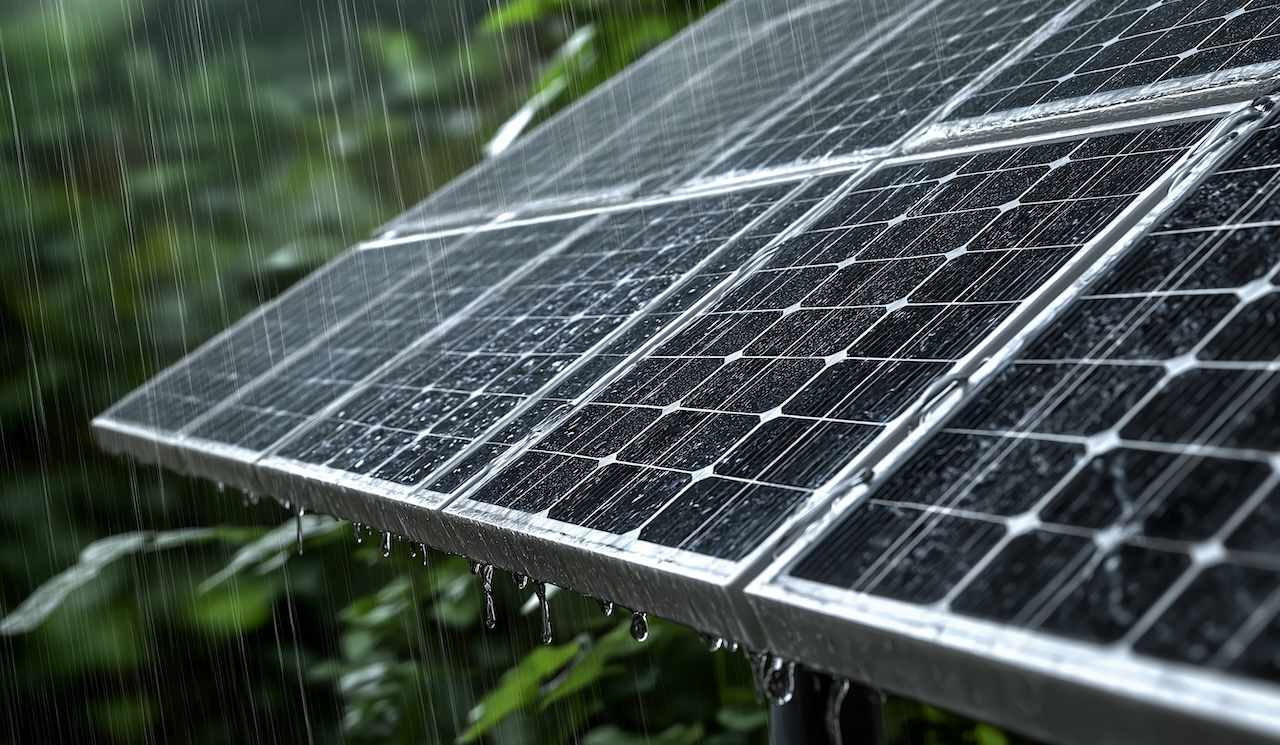
Your solar installation in Southern Oregon must withstand the forces that cause outages. Racking should meet local wind and snow load requirements—coastal zones require 160 mph wind ratings, mountain regions need 50-70 psf snow ratings. All electrical enclosures should carry NEMA 3R (rainproof) or NEMA 4X (corrosion-resistant) ratings. Critter guards prevent rodents from accessing wiring.
For regions with regular rain and clouds, selecting solar panels that work well in the rain becomes crucial. High-efficiency monocrystalline cells with excellent low-light spectral response and anti-reflective coatings maximize diffuse light capture. Three-tier surge protection devices at the array, inverter, and main panel defend against lightning-induced voltage spikes.
Read More: Can Solar Panels Survive Oregon’s Wind, Snow & Hail?
Cost, Incentives & Value During Outages
A properly sized battery system eliminates generator dependency, saving $500-2,000 annually on fuel and maintenance. In time-of-use regions, batteries provide daily arbitrage value by charging during cheap off-peak hours and discharging during expensive peaks, generating $400-1,200 annually.
The federal Investment Tax Credit allows deducting 30% of total system costs from federal taxes. Many states offer additional rebates. The resilience value—maintaining medical equipment, preventing frozen pipes, preserving food, continuing remote work—often exceeds financial calculations for homeowners in outage-prone regions.
Smart Energy Management During a Storm
Before severe weather, increase battery reserve to 70-80% and pre-condition your home by running HVAC to a comfortable temperature—well-insulated homes coast 6-12 hours on thermal mass alone. Fill water containers before outages affecting well pumps.
During outages, shift all discretionary consumption to midday solar production hours. Cook energy-intensive meals during solar production rather than drawing from batteries overnight. Smart electrical panels like Span or Lumin automatically shed non-essential circuits when battery charge drops below configured thresholds.
Core Components to Discuss Before Professions Installation
For panels, prioritize efficiency above 20%, verified snow/wind load ratings, strong low-light performance, and 25-year warranties. For hybrid inverters, confirm true islanding capability with automatic transfer switch, maximum surge power rating exceeding your largest motor starting current, generator input ports, and smartphone apps without subscription fees.
For batteries, confirm chemistry (LiFePO? preferred), usable capacity, maximum continuous and peak surge power output, scalability path, comprehensive warranty (10 years and 4,000+ cycles minimum), and UL 9540/1973 certifications. Balance of system components should include surge protection devices at array, inverter, and main panel; properly rated automatic transfer switch; clearly labeled critical loads panel; and appropriate service panel upgrades if needed.
Talk to Summit Solar and Battery—get a custom outage-ready design and quote. Our team will analyze your utility bills, assess your critical loads, model expected runtime under storm conditions, and design a system providing genuine peace of mind. Contact us today to schedule your free consultation.